


James Osborne
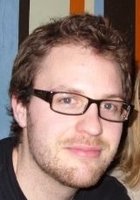
Dr James Osborne
Biography
I am running a workshop on Cell Based and Individiual Based Modelling (CBIBM) as part of the 2014 International Conference on Computational Science, 10th-12th June 2014, Cairns Australia. For more information and to submit a paper or abract for a talk go here.
A recent poster I presented at the "Workshop on Mechanics and Growth of Tissues: from Development to Cancer" in paris in January 2014 is availiable here.
In 2000-2004 I completed an undergraduate degree in Mathematics at New College. From there I went to the Life Sciences interface Doctoal Training Centre (LSI DTC) to begin my DPhil studies. For research component of my DPhil I was based in the Computational Biology Group under the supervision of Jonathan Whiteley, my thesis was entitled "Numerical and Computational Methods for Simulating Multiphase Models of Tissue Growth".
From 2008-2011 I was working as a Post Doctoral Research Asistant, in the Computational Biology Group, looking at "Computational Approaches to Multiscale Modelling in Systems Biology" as part of the Oxford Centre for Integrative Systems Biology (OCISB). Between 2009 ans 2013 I returned to the DTC (www.dtc.ox.ac.uk) as an Associate Director with my time split betwen research and the DTC.
Since 2011 I have been a Senior Researcher in the Computational Biology Group and lead the cell based modeling group.
Since July 2013 I have been working at Microsoft Research Cambridge as part of the Boiological Computation Group in the Computational Science Laboratory.
News
D.Phil Funding available: The Doctoral Training Centre has funded DPhil studentships available for 2014-2015. Please go to the DTC website www.dtc.ox.ac.uk for details.
Research
My expertise is in numerical and computational methods for mathematical models of biological phenomena. I have experience in the formation and simulation of continuum, discrete and hybrid modes using techniques from both applied mathematics and numerical analysis.
My current Interests are in the development of robust mathematical and numerical methods for multiscale modeling in systems biology. Key areas of interest are
- The propagation of error in multiscale systems and the development of methods that minimise this error.
- At what scales do we need to model and at what level of detail.
- To what extent do we need to couple the mathematical models of differing scales.
- What the role of noise (both intrinsic and extrinsic) is in biological systems and ways to model this.
The main aspect of this work is developing the cell-based component of the Chaste project (www.cs.ox.ac.uk/chaste), a key question here is, which model is appropriate? The following movies show a comparison between a cell centre based simulation and a cell vertex based simulation, and the effect of varying cell properties in the models.
Left: a crypt, represented by a cell-centre model (left) and a cell-vertex model (right). Right: a crypt represented by a cell-centre model with a population of mutant cells shown in black, the simulation on the right represents mutant cells with increased adhesivenes.
Chaste can be used to simulate interacting populations of cells in 2D and 3D.
Left: monoclonal conversion in a healthy crypt in a three dimensional fixed geometry. Right: demo of a simulation with multiple crypts.
See www.cs.ox.ac.uk/chaste for more information.
Another of my research interests is the area of numerical and computational methods for multiphase models of tissue growth. Involving the application of the finite element method to coupled and constrained partial differential equations. For my doctoral thesis I developed a numerical and computational framework based upon the galerkin finite element method that allows the numerical solution of coupled systems of parabolic, elliptic and hyperbolic PDEs resulting from multiphase models of tissue growth. the modelling approach is to consider the tissue to be composed of separate constitutive phases, which are each governed by suitable continuum physical laws. This enables investigation of the effect of interactions between constitutive phases on the growth of the tissue. The framework has been used to investigate tissue growth in a perfusion bioreactor and also the development of a solid tumour, under non-uniform environmental conditions.
D.Phil Funding available: The Doctoral Training Centre has around 40 D.Phil studentships available annually across a range of interdisciplinaary areas including Computational Biology (this includes a small number available to international students). Please go to the DTC website www.dtc.ox.ac.uk for details.
Teaching
In adition to my research I hold the position of Associate Director at the Doctorail Training Centre in Oxford where I am responsible for running the mathematical based courses. For more information about the DTC see www.dtc.ox.ac.uk. I am also a college lecturer in mathematics at Pembroke College (www.pmb.ox.ac.uk) where I give tutorials and classes to students on the undergraduate mathematics course (www.maths.ox.ac.uk).
I have developed an Online version of the Matlab course taught at the DTC and this is freely availiable here http://www.dtc.ox.ac.uk/online-learning/matlab/
Selected Publications
-
Ten simple rules for effective computational research
James M Osborne‚ Miguel O Bernabeu‚ Maria Bruna‚ Ben Calderhead‚ Jonathan Cooper‚ Neil Dalchau‚ Sara−Jane Dunn‚ Alexander G Fletcher‚ Robin Freeman‚ Derek Groen and others
In PLoS Computational Biology. Vol. 10. No. 3. Pages e1003506. 2014.
Details about Ten simple rules for effective computational research | BibTeX data for Ten simple rules for effective computational research | DOI (10.1371/journal.pcbi.1003506)
-
The free energy landscape of dimerization of a membrane protein‚ NanC
Dunton T. Goose J. Gavaghan D.J. Sansom M. and J.M. Osborne
In PLoS Computational Biology. 2014.
Details about The free energy landscape of dimerization of a membrane protein‚ NanC | BibTeX data for The free energy landscape of dimerization of a membrane protein‚ NanC | DOI (10.1371/journal.pcbi.1003417)
-
Computational models reveal a passive mechanism for cell migration in the crypt
Dunn S.J. Näthke I. and J.M. Osborne
In PLoS One. 2013.
Details about Computational models reveal a passive mechanism for cell migration in the crypt | BibTeX data for Computational models reveal a passive mechanism for cell migration in the crypt | DOI (10.1371/journal.pone.0080516)